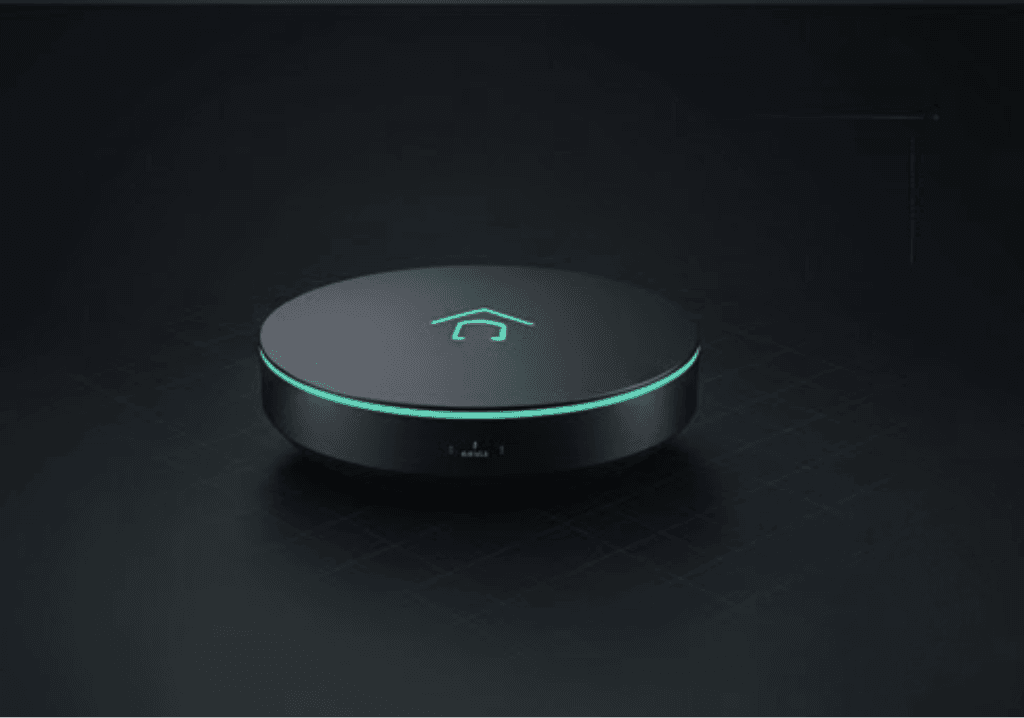
The C-wire (common wire) is the Achilles heel of smart thermostat installation. It provides continuous 24V power, which most modern smart thermostats need to maintain WiFi connectivity and features like energy monitoring.
The problem: many older homes (built before 2000) don't have a C-wire run from the furnace to the thermostat. If you're in this situation, don't worry. This guide covers three solutions, from simple workarounds to running a new wire entirely.
Understanding the C-Wire
Before diving into solutions, let's understand what you're working with.
What It Does
The C-wire provides constant 24V AC power to your thermostat. Without it, your smart thermostat must steal small amounts of power from other wires (like the heating wire) during brief moments, which is unreliable and causes devices to drop offline or restart randomly.
Why It's Missing
Older thermostats only needed power when switching between heating and cooling. They didn't need continuous power, so builders often skipped running a separate C-wire. The heating, cooling, and fan control wires were enough.
Why Smart Thermostats Need It
Modern smart thermostats maintain WiFi connectivity, display backlit screens, and run constant diagnostics. This requires 24V power all the time, not just during heating/cooling cycles.
Step 1: Check If You Already Have a C-Wire
Many people assume they don't have a C-wire when they actually do.
Visual Inspection
- Turn off power at your circuit breaker (the breaker labeled "Heating" or "HVAC")
- Remove your current thermostat from the wall (usually held by two screws or a clip)
- Look at the wires inside the hole — you should see 4–6 colored wires
- Take a photo with your phone for reference
- Look for a wire connected to a terminal labeled "C" (common) or "Com"
If you see a wire at "C": You have a C-wire! Proceed directly to your thermostat's installation guide; this entire article doesn't apply to you.
If the "C" terminal is empty: You're in the "no C-wire" situation. Keep reading.
Check the Other End
If your wall terminals don't show a C-wire, there might be an unused wire coiled up at your furnace:
- Access your furnace (usually in basement, attic, or utility closet)
- Look for the thermostat control panel — it's a small circuit board with screw terminals
- Check if there's a fifth or sixth wire coiled or bundled that's not connected to anything
- If you find one, you might be able to run it up to your thermostat (see Solution 3 below)
If you don't find anything, you'll need to use Solution 1 or 2.
Solution 1: Use the G-Wire Workaround (Quick, Free)
The G-wire (fan control) can be repurposed as a C-wire in many cases. Google Nest recommends this approach.
How It Works
The G-wire normally controls your furnace's blower fan. During heating/cooling cycles, your thermostat briefly signals the G-wire to turn on the fan. With the C-wire workaround, you connect the G-wire to power the thermostat instead, and the thermostat software handles the fan differently.
Trade-off: This disables "fan-only" mode. You won't be able to run the fan without heating or cooling.
When This Works
- Heating and cooling systems without heat pumps
- Systems with simple on/off fan control
- Most gas furnaces and air conditioners
When This DOESN'T Work
- Heat pump systems (see "Heat Pump Alert" below)
- Systems with multi-speed fan control
- Homes with multiple zones
How to Implement
- Turn off power at your circuit breaker
- Remove your thermostat from the wall
- Look at the G-wire terminal — it should have a wire connected to it (usually green)
- Loosen the screw on the "C" terminal and insert the G-wire there instead
- Leave the "G" terminal empty
- Take a photo of the new configuration before proceeding
- Turn power back on
- Install your new smart thermostat using the new C-wire connection
- In the thermostat app, under "Equipment," make sure to tell it you're using the G-wire as C-wire and that fan-only mode is disabled
Critical: Not all thermostats support this. Check your thermostat's manual or contact the manufacturer before trying this.
Solution 2: Install a Power Extender Kit (Recommended)
This is the middle-ground solution. Nest sells the Nest Power Connector, and Ecobee includes the Power Extender Kit (PEK) with many models. These devices add external power to your system.
How It Works
Both the Nest Power Connector and Ecobee PEK install at your furnace control board (not at a wall outlet). They tap into the existing 24V AC transformer that your HVAC system already has, creating a dedicated C-wire path without running new wire through your walls.
Pros
- Works with heat pumps and complex HVAC systems
- Preserves all thermostat features (including fan-only mode)
- No running new wire through your walls
- Takes 30–60 minutes to install
Cons
- Costs $30–100 depending on brand
- Requires access to your furnace area
- May need an electrician if your furnace setup is unusual
Installation Steps for Nest Power Connector
- Turn off power at your circuit breaker
- Open your furnace access panel and locate the control board with thermostat wire terminals (labeled R, W, Y, G, C, etc.)
- Take a photo of your current wiring before disconnecting anything
- Disconnect your thermostat wires from the furnace control board terminals
- Connect the Power Connector inline between the furnace control board and your thermostat wires, following Google's included wiring diagram — the Power Connector sits between the board and the existing wires
- The Power Connector creates a C-wire path using your existing wiring — no new wire needs to be run through walls
- Mount the Power Connector to the furnace or nearby wall using the included adhesive
- Turn power back on at the breaker
- Install your Nest thermostat following the on-screen setup — it will detect the Power Connector automatically
Important: Follow Google's specific wiring diagram included with the Power Connector. The exact terminal connections depend on your HVAC system type (heat only, heat + AC, heat pump). Do not improvise wiring — incorrect connections can damage your HVAC control board.
For Ecobee: Ecobee includes a Power Extender Kit (PEK) with most models. The PEK installs similarly at the furnace control board. Follow Ecobee's specific wiring diagram included in the box — it varies based on your system configuration.
Solution 3: Run a New C-Wire (Best Long-Term)
If you're willing to do the work, running a new wire from your furnace to your thermostat is the most robust solution. It works with any thermostat, any HVAC system, and eliminates future workarounds.
What You'll Need
- 18/2 or 18/4 low-voltage wire (available at hardware stores, ~$0.20/foot)
- Wire staples or clips (to secure wire along walls/framing)
- Fish tape (if running wire inside walls)
- Screwdrivers (Phillips and flathead)
- Wire strippers
- Electrical tape
How to Route the Wire
Option A: Run along the wall (easier, more visible)
- Choose a path from your furnace to your thermostat
- Plan to run the wire along existing cables, behind baseboards, or along your wall studs
- Use wire staples every 12–16 inches to secure it
- This looks less professional but is much faster
Option B: Run inside the wall (hidden, more work)
- Use a fish tape to pull the new wire through the wall cavity
- Start at the furnace and feed the fish tape up through the wall to the thermostat location
- Attach the new wire to the fish tape and pull it back down
- This requires skill and care not to damage existing wiring
Installation Steps
-
Turn off power at the breaker
-
Disconnect your current thermostat and take a photo of the wiring
-
At the furnace end:
- Cut a length of wire long enough to reach from the furnace to the thermostat (add 10 feet for slack)
- Strip ½ inch of insulation from both ends
- Connect one end to an unused C terminal on the furnace control panel (or share the existing common if the panel allows)
- Use a wire nut or terminal screw to secure it
-
Route the wire along your chosen path (wall, inside framing, etc.)
- Secure it with staples every 12–16 inches
- Avoid sharp bends; keep curves gradual
- Don't run it near sharp metal edges or near hot pipes
-
At the thermostat end:
- Strip ½ inch of insulation from the wire end
- Insert it into the C terminal on your new smart thermostat
- Tighten the terminal screw to secure it
-
Turn power back on and test your system
-
Install your new thermostat using the proper C-wire connection
Hiring an Electrician
If you're not comfortable with this, hire a licensed HVAC technician or electrician. The cost is usually $200–500, which is reasonable for a multi-year installation.
Special Consideration: Heat Pump Alert
If you have a heat pump system, the G-wire workaround (Solution 1) often does not work.
Heat pumps handle heating and cooling differently:
- They use the heat pump compressor for both modes
- They rely on a reversing valve to switch between heating and cooling
- They need the ability to run fans independently during defrost cycles
For heat pump systems, you must use:
- Solution 2 (Power Extender Kit), or
- Solution 3 (Run a new C-wire)
When choosing a thermostat, verify in the product specs or manual that it's rated for heat pump systems. Most smart thermostats are, but always confirm.
Step 2: Install Your Smart Thermostat
Once you've implemented your C-wire solution, installation is straightforward:
-
Turn off power at the breaker
-
Remove your old thermostat from the wall
-
Follow your new thermostat's wiring guide for terminal placement:
- Rh (heating): Red wire
- Rc (cooling): Usually jumpers to Rh; only separate if you have two independent heat/cool transformers
- W (heat): White wire
- Y (cool): Yellow wire
- G (fan): Green wire
- C (common): Blue wire (from your C-wire solution)
-
Secure the new thermostat on the wall using the included hardware
-
Turn power back on at the breaker
-
Complete the app setup (follow your thermostat's documentation)
Common Problems and Fixes
Problem 1: Thermostat Loses WiFi Connection Randomly
Cause: Insufficient power from G-wire workaround or weak Power Connector connection
Fix:
- If using the G-wire workaround, switch to Solution 2 or 3
- Check all screw terminals for tight connections
- Verify transformer voltage with a multimeter (should be 18–24V AC)
- Restart the thermostat by flipping the breaker off for 30 seconds, then back on
Problem 2: Thermostat Displays "Power" Error or Won't Turn On
Cause: No C-wire connected, loose wire connection, or failed Power Connector
Fix:
- Visually inspect the C-wire connection at both the thermostat and furnace
- Tighten any loose screw terminals
- Test voltage with a multimeter at the thermostat C-terminal; you should see 18–24V AC
- If using a Power Connector, check that its input wires are securely connected to the transformer
Problem 3: Heating or Cooling Doesn't Work
Cause: Wrong wire in wrong terminal, or loose heat/cool wire connections
Fix:
- Take a photo of your wiring and compare it to your thermostat's manual
- Tighten all screw terminals with a screwdriver
- Power cycle the thermostat (flip breaker off/on)
- Test your system: set thermostat to heat, turn up the temperature, listen for furnace to activate
Problem 4: Fan Runs Constantly
Cause: G-wire is connected to both G and C terminals, creating a constant signal
Fix:
- If using the G-wire workaround, make sure the G terminal is completely empty
- If using a Power Connector, verify that the G-wire is connected only to the G terminal, not to any power line
- Power cycle and re-test
Problem 5: Thermostat Was Working, Now Won't Connect to WiFi
Cause: Power failure, transformer overload, or failed Power Connector unit
Fix:
- Check that your circuit breaker is in the ON position
- Test transformer voltage; if it's below 16V AC, you may have an electrical fault
- If using a Power Connector, unplug it from the wall outlet and plug it back in (it may need a reset)
- Perform a factory reset on the thermostat (hold the reset button for 10 seconds) and set it up again
Installation Checklist
Before considering your installation complete:
- Power is on at the breaker
- C-wire is securely connected at both thermostat and furnace
- All other wires (R, W, Y, G) are correct and tight
- Thermostat displays the correct temperature
- Heating works: set temperature high, listen for furnace
- Cooling works: set temperature low, listen for AC compressor
- Fan works: set to manual fan, hear blower running
- WiFi connects and stays connected for 24+ hours
- Mobile app shows the thermostat and temperature
Affiliate Callout
If you're still deciding which smart thermostat to buy, see our guide to the best smart thermostat. We compare Nest, Ecobee, and other brands, including their C-wire compatibility and which models work best without a C-wire.
Final Notes
- Take photos before you start. Your old thermostat's wiring is your reference. A phone photo takes 5 seconds and saves hours of troubleshooting.
- Label your wires. If you remove your old thermostat, use small pieces of tape to label each wire before disconnecting them.
- Get help if unsure. There's no shame in calling an HVAC technician. A $200 service call beats a $500 repair bill for a mistake.
- Don't jump directly to "run a new wire." Try the G-wire workaround first (if not a heat pump). It's free and takes 10 minutes.
- Test before installing the thermostat. Once you've set up your C-wire solution, power everything on and verify 24V is present at the C terminal with a multimeter before installing the new thermostat.
Smart thermostats save money on heating and cooling, but they need proper power. Take the time to get this right, and you'll enjoy reliable operation for years.